
Registered Massage therapy, Craniosacral Therapy & Visceral Manipulation
Our Registered Massage Therapists bring a diverse range of training and therapeutic approaches to their work. While massage is an important part of what they do, their practice goes beyond a traditional massage. Depending on their individual training, they may draw from approaches such as craniosacral therapy, visceral manipulation, neural manipulation, somatic work, functional breathing and more.
At Willow House, each treatment is tailored to the individual. We take the time to listen to what you’re experiencing, understand how different parts of the body may be influencing one another, and choose the approaches that best support your needs. Our RMTS each bring their own unique areas of expertise, giving you the opportunity to find a practitioner and treatment approach that feels right for you.
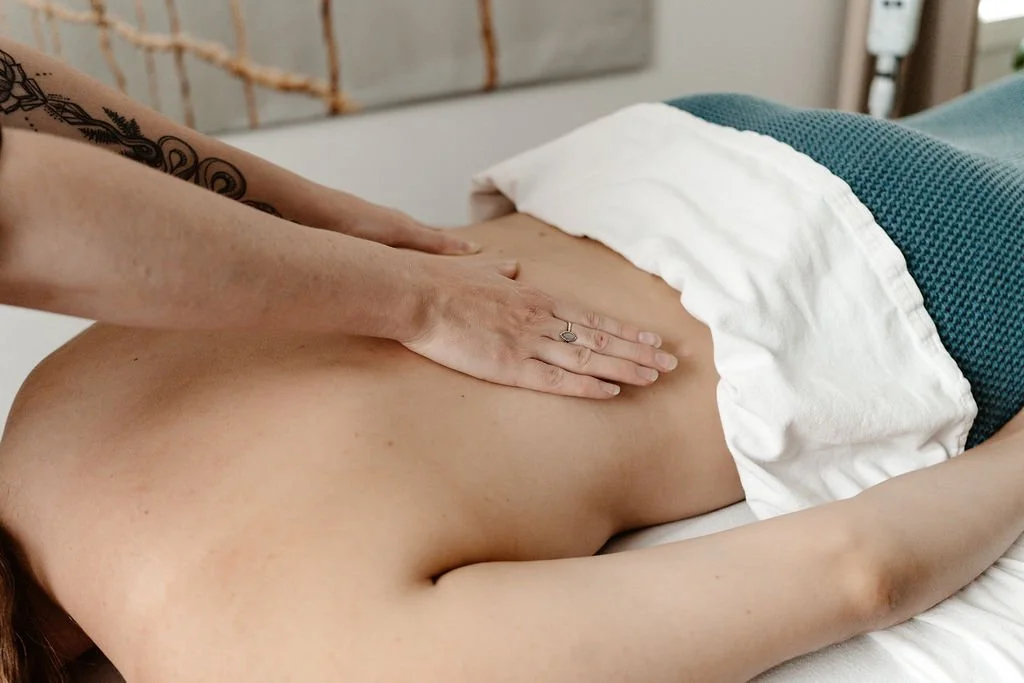
CranioSacral Therapy
CranioSacral Therapy (CST) is a gentle, hands-on approach developed by osteopathic physician Dr. John E. Upledger following years of clinical research at Michigan State University, where he served as a professor of biomechanics. Using a light touch — typically no more than the weight of a coin — practitioners evaluate and release restrictions within the craniosacral system: the membranes and cerebrospinal fluid that surround and protect the brain and spinal cord.
Because the central nervous system connects to every other system in the body, releasing tension here can support improved function throughout the musculoskeletal, digestive, respiratory, and circulatory systems as well. CST works with the body's fascia — the connective tissue network running throughout — to help ease physical and emotional tension held deep within the tissues, supporting the body's own capacity for self-regulation, self-correction, and healing.
This modality is used to address a wide range of concerns, including headaches and migraines, neck and back pain, TMJ dysfunction, stress-related disorders, and recovery from concussion or trauma. It's a subtle, deeply relaxing therapy suited to nearly every age and stage of life.
Visceral Manipulation
Visceral Manipulation (VM) is a gentle, hands-on therapy developed by French osteopath and physical therapist Jean-Pierre Barral, founder of the Barral Institute. VM addresses the structural relationships between the viscera (internal organs) and their fascial and ligamentous connections throughout the body — including the digestive, respiratory, urogenital, vascular, nervous, and lymphatic systems.
The body's organs are in constant, subtle motion — moving with breath, posture, and everyday movement. When an organ's mobility becomes restricted, whether from surgery, injury, illness, or chronic tension, that restriction can pull on surrounding fascia and create strain patterns that show up far from their source — contributing to back pain, digestive complaints, postural imbalances, and more. Using specific, gentle manual pressure, practitioners assess these restrictions and help restore normal movement, tone, and mobility to the organs and their supporting structures.
Because the body is deeply interconnected, this work often complements craniosacral and neural manipulation techniques, supporting the body's own capacity to move and function with greater ease.
-
CST is commonly used to help manage headaches and migraines, neck and back pain, TMJ disorders, fibromyalgia, chronic fatigue, stress and tension-related conditions, and symptoms following concussion or trauma.
-
Yes. Because the technique is so gentle, CST is considered appropriate for people of all ages, from infants through seniors, including during pregnancy.
-
No. The touch used in CST is extremely light — generally no more pressure than the weight of a nickel. Most people find sessions deeply calming, and it's common to feel relaxed or even fall asleep on the table.
-
Clients remain fully clothed and lie comfortably on a treatment table. The practitioner uses light touch at the head, spine, sacrum and along extremities to assess the craniosacral rhythm and gently release areas of restriction. Sessions are quiet and unhurried, typically lasting 45–60 minutes.
-
No. VM uses gentle, sustained manual pressure rather than deep or forceful technique. Most clients find it comfortable and often deeply relaxing.
-
Clients typically remain clothed and lie on a treatment table while the practitioner uses light, specific pressure over areas of the abdomen, pelvis, or thorax to assess and address restrictions in organ mobility. Sessions are calm and unhurried.
-
VM is gentle and broadly well-tolerated, but there are some situations — such as early pregnancy or certain acute medical conditions — where it may need to be modified or avoided. It's a good idea to disclose relevant health history before a session.
-
VM is commonly sought for chronic back and neck pain, digestive complaints such as bloating and constipation, post-surgical or post-injury scar tissue and adhesions, pelvic pain, and general postural or structural imbalances.